

Sustainability and Waste Reduction
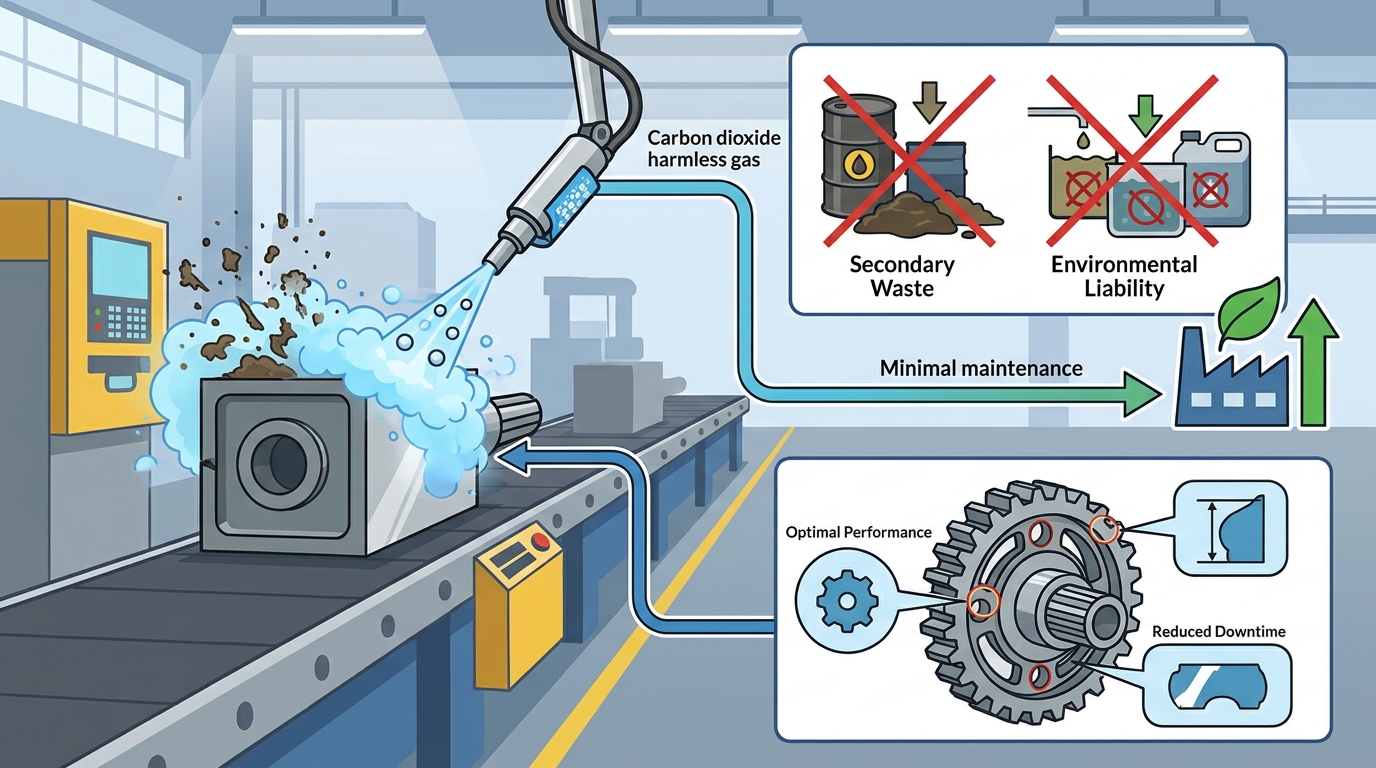
Dry ice blasting is a water-free and chemical-free cleaning process that eliminates the need for hazardous waste disposal. Traditional cleaning methods often generate sludge or require neutralizing agents, which increases environmental liability. By using solid carbon dioxide pellets, manufacturers avoid creating secondary waste streams that require specialized handling. This approach aligns with corporate sustainability goals and reduces the environmental footprint of maintenance operations. For additional details, review the arcticresto com.
The sublimation of dry ice into gas means that the cleaning medium disappears after impact. This characteristic ensures that no residue remains on the equipment surface. Consequently, facilities can maintain cleaner work environments and reduce the volume of solid waste sent to landfills. For manufacturers focused on environmental, social, and governance (ESG) metrics, this method provides a measurable improvement in waste management practices. For additional details, review the .
Equipment Lifespan and Component Protection
Dry ice blasting is a non-abrasive cleaning technique that preserves the integrity of sensitive machinery parts. Unlike sandblasting or media blasting, which can erode metal surfaces and alter tolerances, dry ice pellets impact contaminants and shatter them without damaging the underlying material. This preservation is critical for precision manufacturing equipment where micron-level accuracy is required. Protecting these components extends the overall lifespan of the machinery and delays the need for expensive replacements. For additional details, review the Customer Experience.
The thermal shock effect of dry ice also plays a role in component protection. As the pellets hit the surface, they cause a rapid temperature drop that helps break the bond between the contaminant and the substrate. This mechanism allows for thorough cleaning without the mechanical stress that can fatigue metal parts. Manufacturers can expect that regular, gentle cleaning cycles will result in less wear and tear on critical assemblies, thereby maintaining operational precision for longer periods. For additional details, review the Frequently Asked Questions.
Downtime Reduction and Operational Efficiency
Mobile dry ice blasting services allow for cleaning to be performed on-site without disassembling complex machinery. This capability significantly reduces the time required for maintenance windows. Traditional cleaning often involves removing parts, transporting them to a specialized facility, and waiting for return. By bringing the cleaning service to the plant floor, manufacturers can complete maintenance during short breaks in production. This efficiency directly translates to higher overall equipment effectiveness (OEE) and better throughput. For additional details, review the About.
Reducing downtime is a primary driver for adopting mobile cleaning solutions. When equipment is cleaned in place, the risk of reassembly errors is minimized. Furthermore, the speed of the cleaning process means that machines can return to service faster than with conventional methods. For high-volume manufacturers, even small reductions in maintenance time can result in significant gains in annual production capacity. The ability to clean while the machine is still installed is a key operational advantage.
Safety and Regulatory Compliance
Dry ice blasting is a safe cleaning method that eliminates the health risks associated with chemical solvents and abrasive media. Workers are not exposed to toxic fumes or fine particulate matter that can cause respiratory issues. This safety profile helps manufacturers maintain compliance with occupational health and safety regulations. It also reduces the need for extensive personal protective equipment (PPE) and ventilation systems during cleaning operations. A safer work environment contributes to lower insurance premiums and reduced liability exposure.
Long-Term Cost Implications
While the initial cost of professional cleaning services is an investment, the long-term savings are substantial. Manufacturers can reduce expenses related to chemical purchasing, waste disposal, and equipment replacement. The extended lifespan of machinery means that capital expenditure on new equipment is deferred. Additionally, the reduction in unplanned downtime prevents lost revenue from halted production lines. These factors combine to create a favorable return on investment over the life of the equipment.
Key Takeaways
- Dry ice blasting eliminates hazardous waste, supporting sustainability goals.
- Non-abrasive cleaning preserves equipment precision and extends machinery lifespan.
- On-site mobile services reduce downtime and improve operational efficiency.
- The process enhances workplace safety and simplifies regulatory compliance.
- Long-term cost savings come from reduced chemical use and delayed equipment replacement.
Frequently Asked Questions
Does dry ice blasting damage sensitive manufacturing equipment?
No, dry ice blasting is non-abrasive and does not damage sensitive components. It cleans through thermal shock and sublimation, preserving surface integrity.
How often should manufacturers schedule dry ice blasting?
Scheduling depends on the level of contamination and production intensity. Regular maintenance cycles are recommended to prevent buildup and ensure consistent performance.
Is dry ice blasting safe for workers in the facility?
Yes, the process is safe and does not produce toxic fumes or harmful particulates. It reduces the need for heavy PPE and improves workplace air quality.
Can dry ice blasting be performed while equipment is installed?
Yes, mobile dry ice blasting allows for in-place cleaning. This eliminates the need for disassembly and reduces overall maintenance time.
What types of contaminants can dry ice blasting remove?
It effectively removes oils, greases, resins, paints, and other stubborn contaminants without leaving residue behind.
How does dry ice blasting compare to chemical cleaning?
Dry ice blasting is a chemical-free alternative that avoids the costs and risks associated with hazardous solvents and waste disposal.
Conclusion
Manufacturers who adopt dry ice blasting can expect significant long-term benefits in equipment longevity, operational efficiency, and cost management. By choosing a specialized provider like Arctic Resto, businesses can access professional mobile cleaning services that align with modern sustainability and safety standards. This approach ensures that production equipment remains in optimal condition, supporting consistent output and reduced downtime for years to come. Learn more: arcticresto com.