

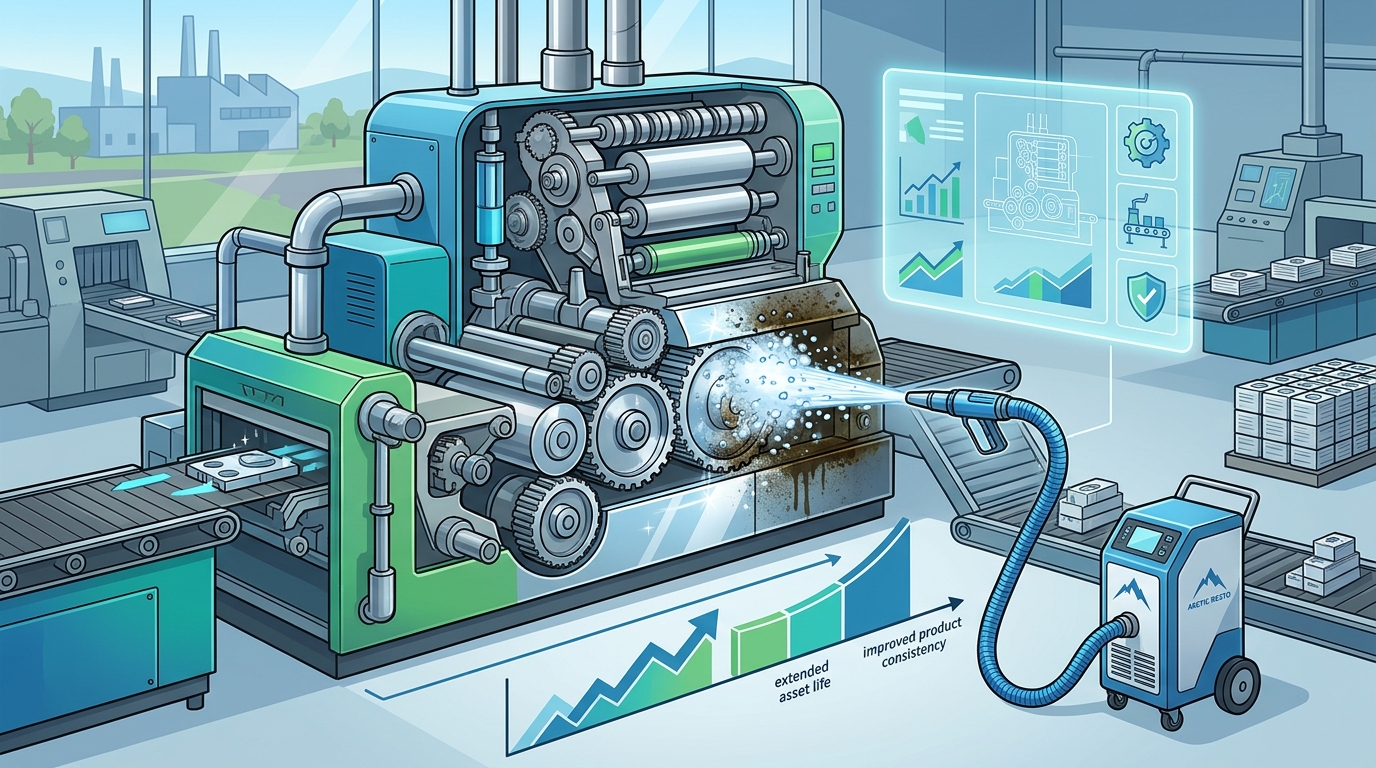
Connecticut manufacturers can expect sustained equipment performance, reduced unplanned downtime, and improved product consistency from dry ice cleaning. This water-free, chemical-free method removes contaminants without causing thermal shock or leaving residue. Over time, these factors contribute to lower maintenance costs and extended asset life. Arctic Resto provides mobile dry ice cleaning services designed to deliver these professional results with minimal disruption to your production schedule. For additional details, review the arcticresto com.
Understanding the Mechanism
Immediate Performance Gains
Manufacturers often notice immediate improvements in equipment efficiency after the first cleaning cycle. For example, a food processing line in Connecticut might experience a 15% increase in throughput after removing built-up sugar or protein residues. This happens because clean surfaces reduce friction and prevent material buildup that can jam or slow down mechanical parts. The absence of water also means that electrical components and sensors remain dry and functional immediately after cleaning. This immediate boost in efficiency allows production teams to meet tighter deadlines without requiring extended maintenance windows. For additional details, review the .
Long-Term Asset Preservation
Over a period of several years, the primary benefit of dry ice cleaning is the preservation of asset integrity. Traditional cleaning methods often involve high-pressure water or harsh solvents that can degrade seals, gaskets, and electronic housings. Dry ice cleaning avoids these risks, thereby extending the operational lifespan of critical machinery. A specific example is the cleaning of injection molding machines, where thermal shock from water can warp precision molds. By using dry ice, manufacturers protect these high-value components from thermal stress. This preservation translates into fewer capital expenditures for replacement parts and new equipment over the long term. For additional details, review the Customer Experience.
Safety and Compliance Benefits
Connecticut manufacturers operate under strict safety and environmental regulations. Dry ice cleaning is a water-free and chemical-free technology, which simplifies compliance with environmental discharge standards. There is no wastewater to treat or dispose of, reducing the administrative burden on facility managers. Additionally, the process is safe for families and pets, making it suitable for facilities that may have on-site offices or visitor areas. This safety profile also reduces the risk of slip-and-fall accidents on the factory floor, as there is no standing water or slippery residue. These factors contribute to a safer work environment and lower insurance premiums over time. For additional details, review the Frequently Asked Questions.
Measuring ROI Over Time
To evaluate the return on investment, manufacturers should track key performance indicators such as downtime hours, maintenance costs, and product defect rates. A typical mobile dry ice cleaning service, like the one provided by Arctic Resto, can be scheduled on a recurring basis to maintain optimal equipment conditions. By comparing these metrics before and after implementing a regular cleaning schedule, facility managers can quantify the financial impact. For instance, reducing unplanned downtime by even a few hours per month can save thousands of dollars in lost production. The mobile nature of the service ensures that these benefits are delivered with minimal downtime, allowing production to resume quickly after each session. For additional details, review the About.
Key Takeaways
- Dry ice cleaning is a non-abrasive, water-free process that removes contaminants without leaving residue.
- Long-term asset preservation protects seals, gaskets, and precision components from thermal and chemical damage.
- The process simplifies environmental compliance by eliminating wastewater and chemical waste.
- Measuring ROI involves tracking downtime, maintenance costs, and defect rates over time.
- Mobile services minimize disruption by delivering professional results directly to the facility.
Frequently Asked Questions
How often should manufacturers schedule dry ice cleaning?
The frequency depends on the type of machinery and the nature of the contaminants. High-throughput lines may require monthly cleaning, while less critical equipment might need quarterly sessions. A professional assessment can help determine the optimal schedule for your specific facility.
Does dry ice cleaning damage sensitive electronics?
No, dry ice cleaning is safe for electronics because it is water-free and non-conductive. The sublimation process leaves no moisture behind, which prevents corrosion and short circuits. This makes it ideal for cleaning control panels and sensor arrays.
What is the environmental impact of dry ice cleaning?
The environmental impact is minimal. Dry ice is solid carbon dioxide, which sublimates into gas that is already present in the atmosphere. There is no secondary waste, no wastewater, and no chemical runoff, making it a sustainable cleaning solution.
Can dry ice cleaning be performed while equipment is running?
In some cases, yes. Because the process is non-conductive and water-free, certain components can be cleaned while the machine is in operation. However, safety protocols must often be followed, and a professional service provider should assess the specific setup.
How does dry ice cleaning compare to traditional pressure washing?
Is dry ice cleaning suitable for food-grade facilities?
Yes, dry ice cleaning is widely used in food-grade facilities. It is a chemical-free process that does not leave behind residues that could contaminate food products. This makes it a safe and effective option for maintaining hygiene standards. Learn more: arcticresto com.